
Scoring a cricket match looks intimidating from the outside, but the core idea is simple: you record what happens on every ball, over by over, until each innings ends. Do that accurately and you have a complete scorecard. This beginner's guide walks through exactly what to track, the notation scorers use, and how a cricket scoring app removes almost all of the manual work.
What you are actually recording
A cricket score answers three questions at any moment: how many runs has the batting side made, how many wickets have fallen, and how many overs have been bowled. So the headline figure looks like 84/3 in 12.4 overs — 84 runs, 3 wickets, after 12 overs and 4 legal balls. Everything you record on each ball feeds those three numbers, plus the individual batting and bowling figures.
Step 1: Set up the innings
Before the first ball, note the two opening batters, the bowler, and the agreed number of overs. On paper this is the top of your scoresheet; in CricFight you simply create the match, pick the two teams, set the overs, and choose who bats first after the toss.
Step 2: Record every ball
Each delivery falls into one of a few outcomes:
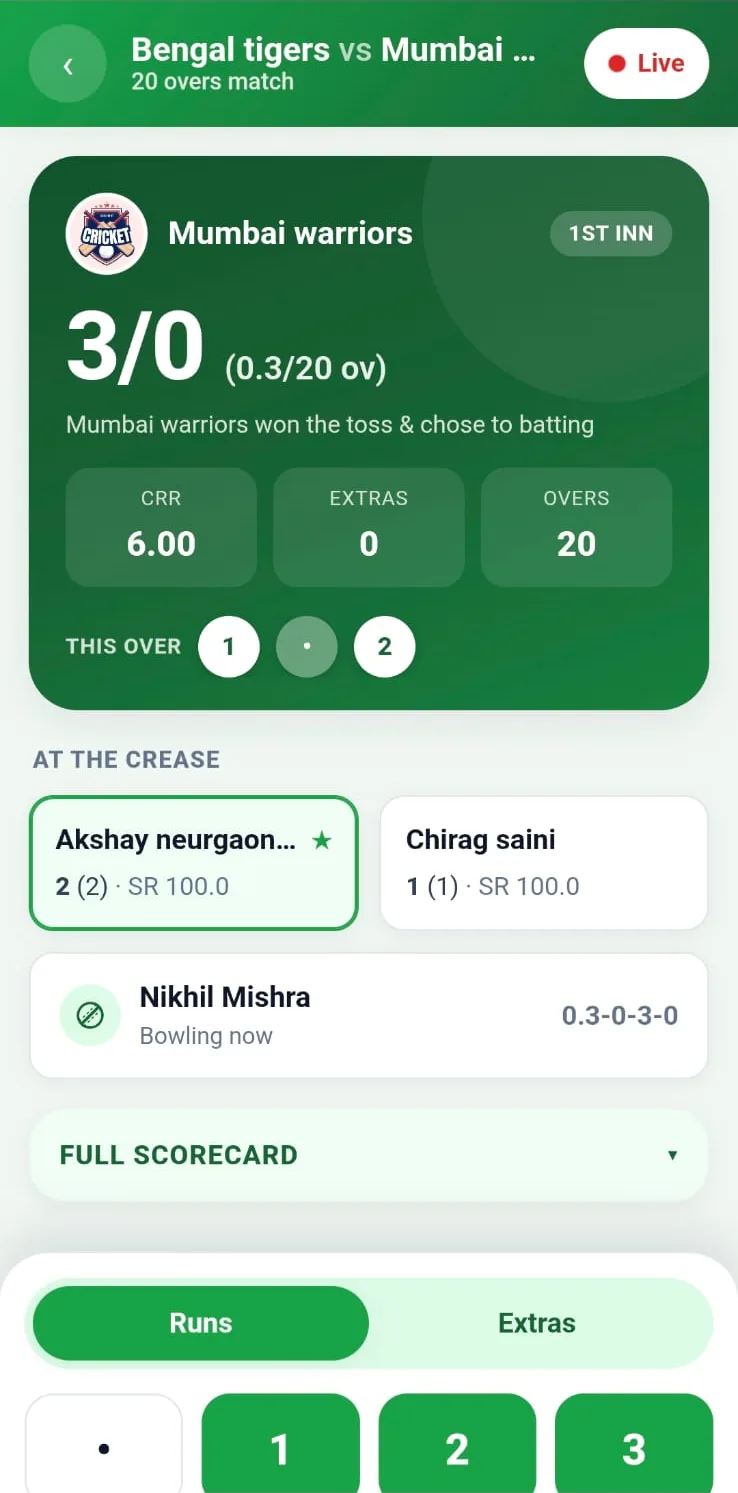
- Runs off the bat: 0 (a dot ball), 1, 2, 3, 4, or 6. These go to the striker and the team total.
- Boundaries: 4 runs if the ball reaches the rope along the ground, 6 if it clears it on the full.
- Extras: runs not hit off the bat (covered below).
- Wicket: the batter is out (covered below).
After six legal deliveries, the over is complete and a new bowler bowls the next over from the other end. The strike rotates on odd runs and at the end of each over.
Step 3: Understand extras
Extras are runs added to the team total but not credited to a batter:
- Wide: ball too far for a normal shot — 1 run, and the ball is re-bowled (doesn't count toward the over).
- No-ball: illegal delivery (e.g. overstepping) — 1 run, re-bowled, and usually followed by a free hit in limited-overs cricket.
- Bye: runs taken when the ball passes the batter without touching bat or body.
- Leg bye: runs taken when the ball hits the batter's body (not the bat).
Getting extras right is the most common place beginners slip up. A scoring app helps here because wides and no-balls automatically re-add the ball to the over so your over count never drifts.
Step 4: Record wickets
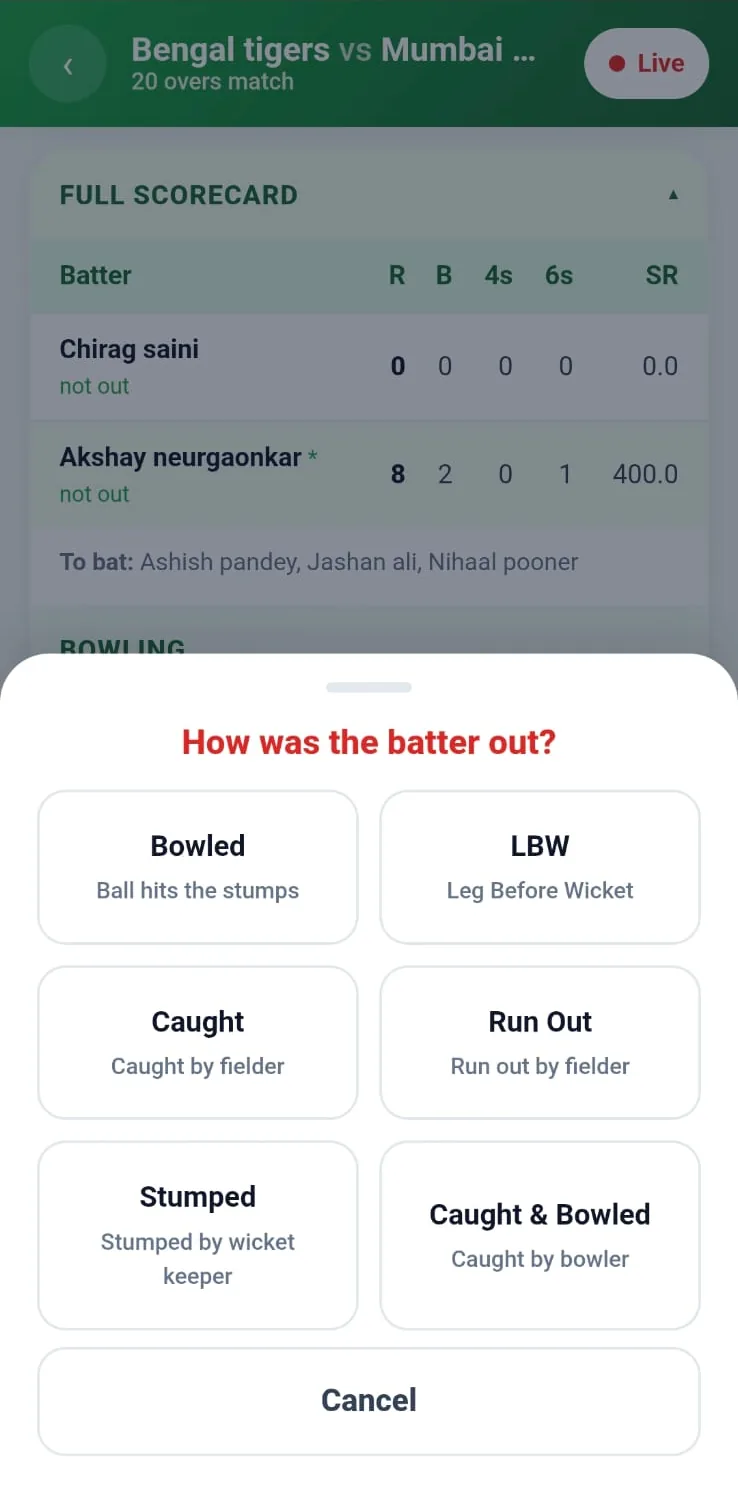
When a batter is out, note how they were dismissed, because it affects who gets credit. The common modes are bowled, caught, LBW, run out, and stumped. A bowler is credited for bowled, caught, LBW, and stumped; a run out is not credited to the bowler. For the full, authoritative definitions, the MCC Laws of Cricket are the standard reference every scorer can rely on.
Step 5: Keep the running figures
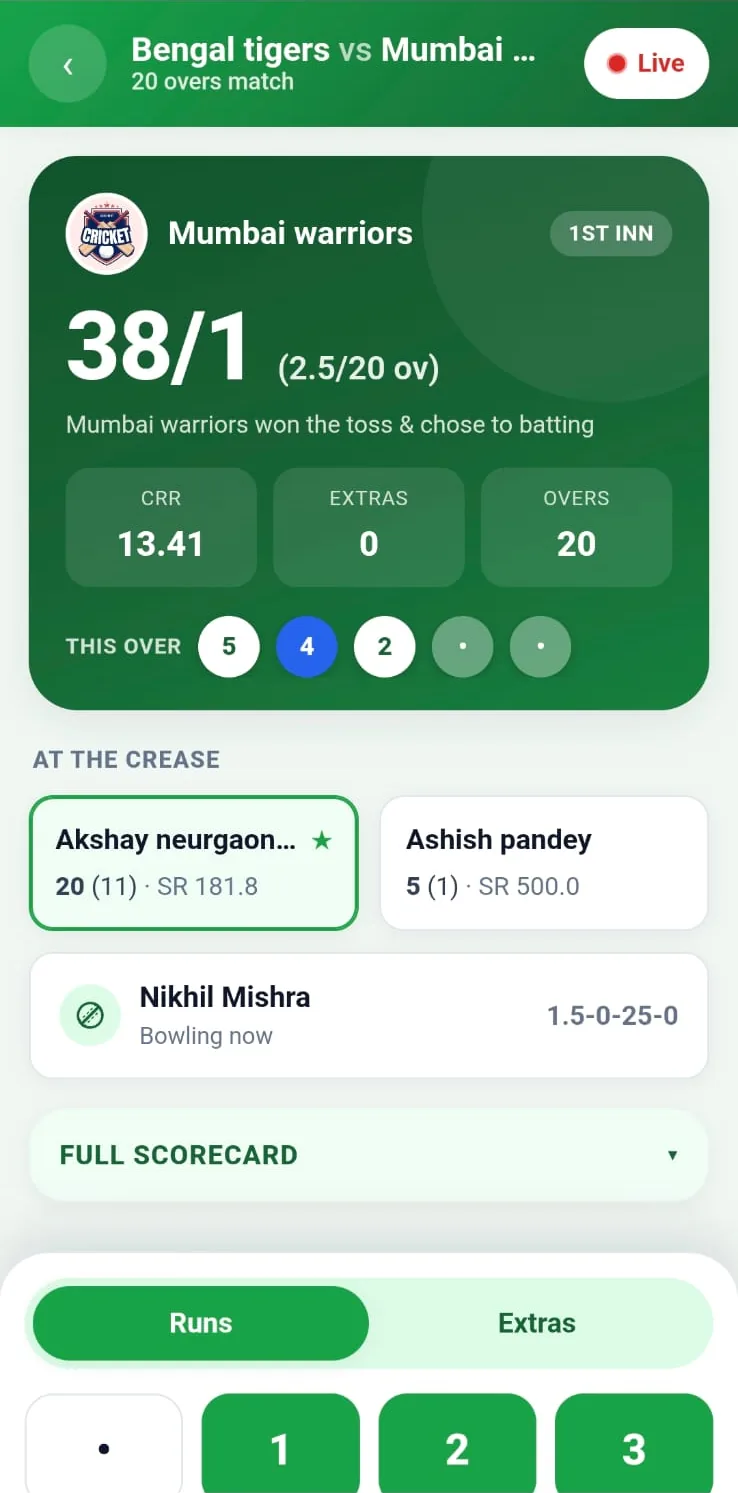
Alongside the team total, a full scorecard tracks each batter's runs and balls faced, and each bowler's overs, maidens, runs, and wickets (their “figures”, e.g. 4-0-22-2). By hand this means a lot of small tallies; with live ball-by-ball scoring every one of these updates automatically as you tap in each ball.
👉 Score your next match free on CricFight — runs, extras, wickets, and a shareable scorecard, all handled for you.
The easy way: let the app do the maths
Manual scoring is a fine skill to understand, but on match day you want speed and zero arguments. With CricFight, the designated scorer taps each ball, the run rate and partnerships update live, the scorecard is shareable by link, and every player's career stats build automatically. If rain interrupts play, here's how to keep the scorecard clean through a stoppage.
Frequently asked questions
How do you write cricket scores by hand?
Use a dot for no run, numbers for runs, a W for a wicket, and symbols for extras (e.g. a circle for a wide). Each over is one row; tally runs and wickets as you go.
What does 84/3 mean in cricket?
The batting side has scored 84 runs for the loss of 3 wickets. (In some countries it's written 3/84.)
Do I need to know all the Laws to score a match?
No. Knowing runs, extras, and the common dismissals covers almost every local match. A scoring app handles the edge cases and the maths for you.