
Local cricket has always had a memory problem. You play a blinder on Sunday, and by Wednesday it's a story nobody can verify. There's no table, no ranking, nothing that says you were the best batter in your area this month. CricFight fixes that with leaderboards: live rankings for players and teams that turn every match into points on a board. Here's how they work, and how to climb them.
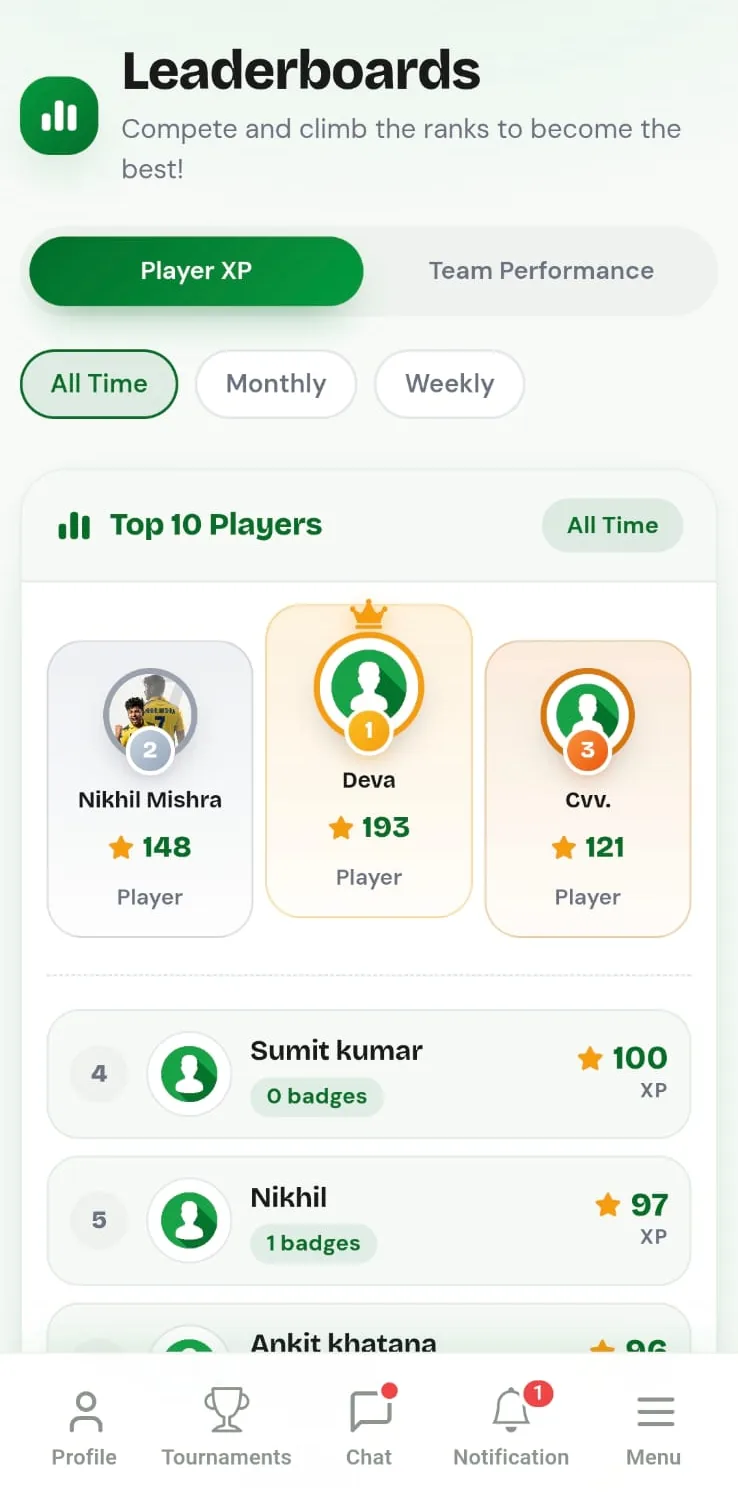
Weekly, monthly, and all-time — for players and teams
CricFight runs leaderboards across three timeframes, and each one answers a different question:
- Weekly — who's in form right now. A great weekend can put you top of the week, which keeps things competitive for casual players who aren't going to top an all-time list.
- Monthly — consistency over a few games, not a single lucky knock.
- All-time — the long game. This is where reputations are built, one season at a time.
Every board comes in two flavours: player rankings and team rankings. So it's not just about your own numbers — your squad has a standing of its own to defend.
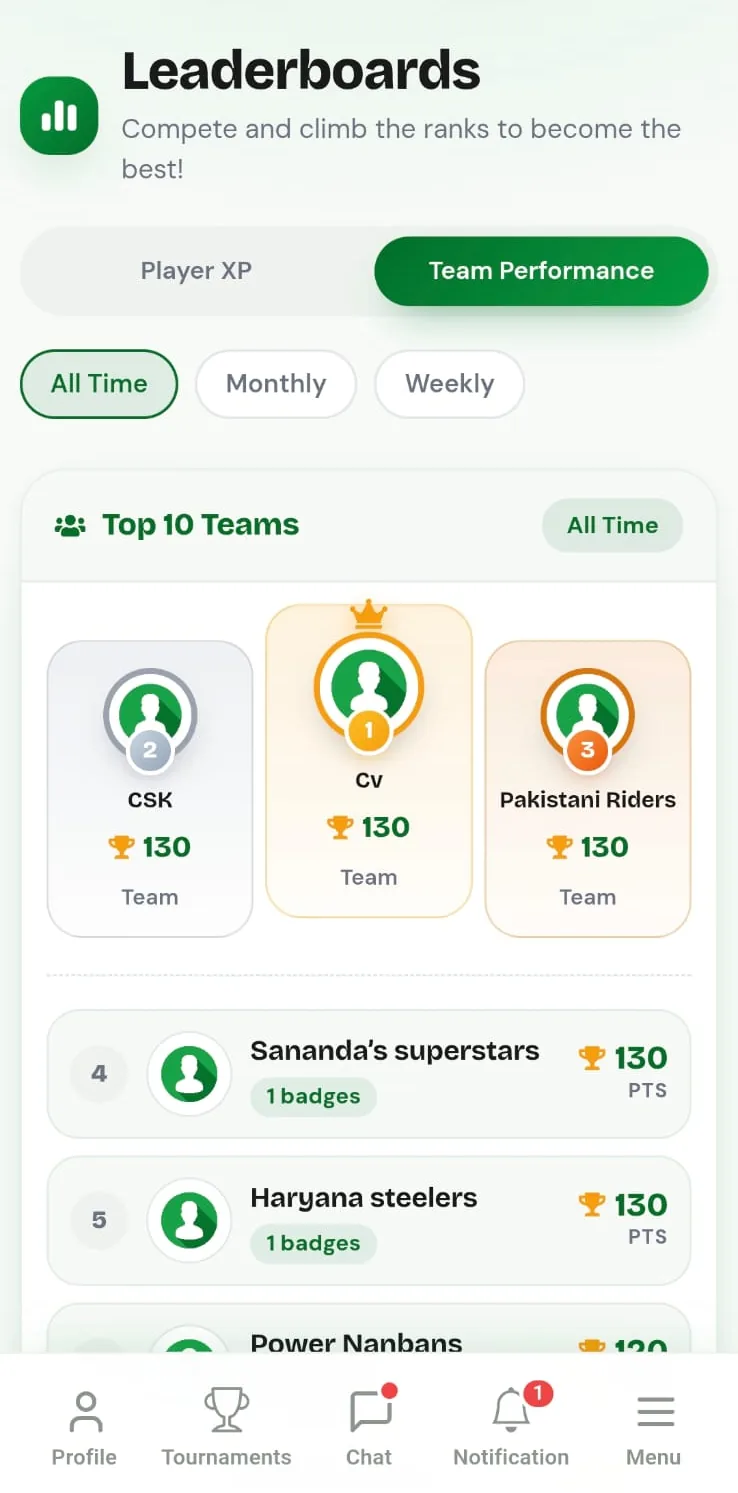
What actually moves you up the board
Rankings are driven by what you do on the field, captured through live ball-by-ball scoring. Because every run, wicket, and dismissal is recorded as the match happens, your player stats across batting, bowling, and fielding feed straight into the rankings — no manual entry, no one “forgetting” to log your five-for. The cleaner the scoring, the more accurate the board, which is why leaderboards and proper live scoring go hand in hand.
Why fair ranking depends on clean data
A leaderboard is only worth climbing if people trust it. That trust comes from the data underneath it being consistent and tamper-resistant — the same match counted once, the same rules applied to everyone, results that don't quietly change after the fact. That's the part we obsess over on the engineering side: rankings that reflect what genuinely happened on the field, computed the same way for every player and every team. A ranking you can trust is a ranking worth chasing.
👉 Start playing and get on the leaderboard — it's free, and every match counts.
How to climb: a practical guide
- Play more games. You can't rank without results, so the first step is fixtures. Use team challenges to line up matches instead of waiting for them to appear.
- Score every match live. A game that isn't scored properly doesn't count toward your ranking. Make live scoring the default for your team.
- Contribute in all three disciplines. Because fielding stats count too, run-outs and catches move you up — not just runs and wickets.
- Be consistent. Weekly boards reward hot streaks, but monthly and all-time rankings reward the players who turn up and perform week after week.
Leaderboards make the whole community stickier
Rankings aren't a vanity feature — they're the reason casual cricket keeps its energy. When there's a board to climb, a mid-season Sunday game suddenly matters. Rivalries form. Teammates push each other. Combined with coins and rewards, live emoji reactions, and team chat, leaderboards are a big part of what makes CricFight a social cricket community rather than a spreadsheet. Every match you play is writing your place in it.
Frequently asked questions
What cricket leaderboards does CricFight have?
Weekly, monthly, and all-time leaderboards, each available for both individual players and teams — so you can track short-term form and long-term standing.
How do I climb the cricket leaderboard?
Play matches and score them live so your performances are recorded. Runs, wickets, and fielding contributions all feed your ranking, and consistency across games moves you up the monthly and all-time boards.
Do fielding stats count toward rankings?
Yes. CricFight tracks batting, bowling, and fielding, so catches and run-outs contribute to where you sit on the board — not just runs and wickets.
Are the leaderboards free?
Yes. Player and team leaderboards are completely free, with no ads, as part of the CricFight platform.